Introduction
Forklift operations in warehouses, manufacturing plants, and logistics centers present persistent safety challenges. Blind spots remain one of the leading causes of pedestrian injuries and equipment collisions in industrial environments. As forklift fleets grow and worksites become more congested, the demand for intelligent, reliable blind spot detection solutions has never been greater. The Forklift AI BSD Blind Spot Detection Video Monitoring System addresses this critical need with an integrated safety solution combining high-definition video, artificial intelligence, and multi-layered alerts.
System Overview
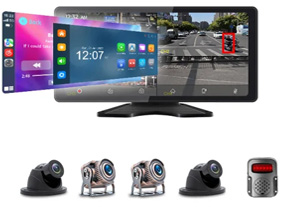
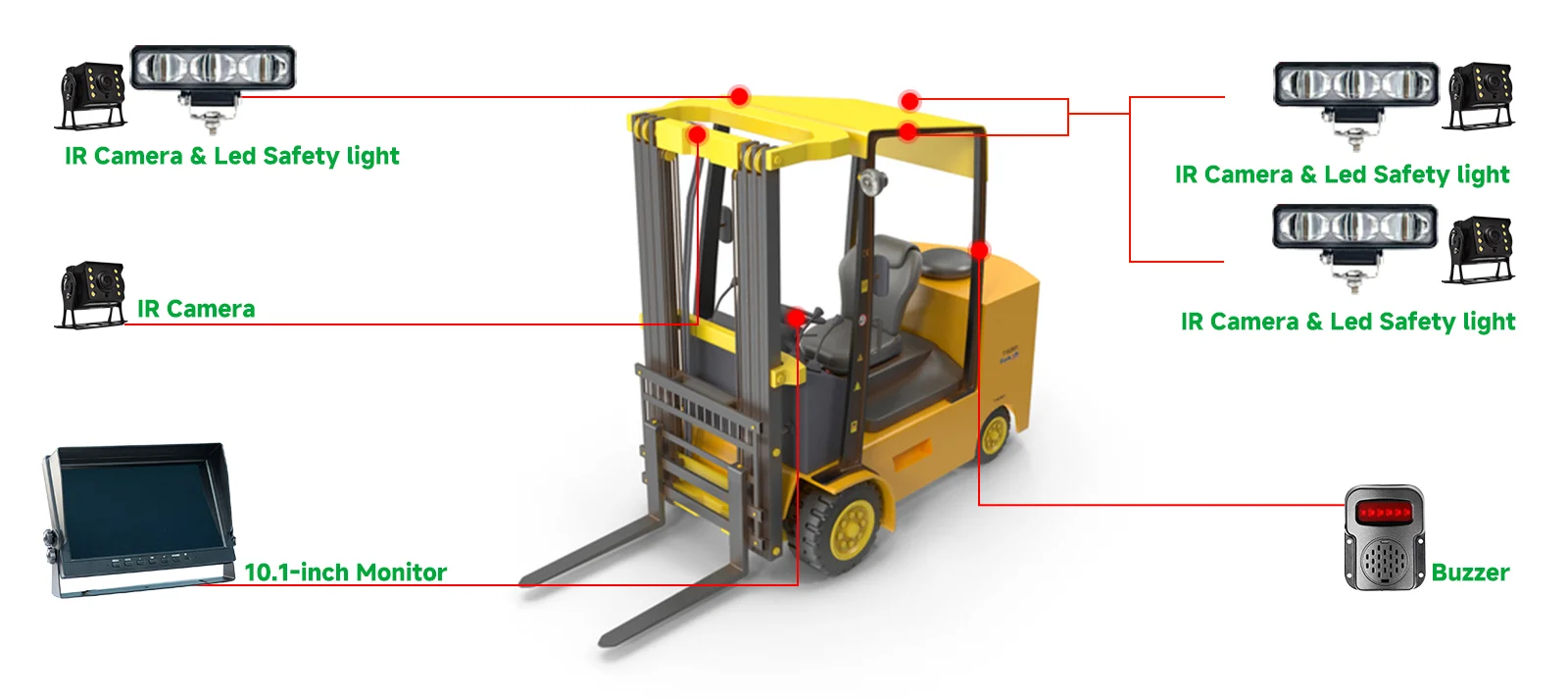
This comprehensive monitoring system features a 10.1-inch high-definition display that provides operators with crystal-clear, real-time views of vehicle surroundings. The large screen enables split-view functionality, allowing drivers to monitor multiple camera feeds simultaneously for complete situational awareness. Unlike smaller displays that can be difficult to read in bright or dynamic conditions, the 10.1-inch monitor ensures critical visual information remains easily visible at a glance.
The system incorporates infrared night vision cameras engineered for low-light and zero-light environments. Warehouses often operate around the clock or in dimly lit conditions where standard cameras fail to deliver usable images. Infrared technology ensures continuous, clear video recording regardless of lighting conditions—from bright daylight to complete darkness. This capability is essential for facilities running multiple shifts or operations in areas with limited overhead lighting.
AI-Powered Blind Spot Detection
At the core of the system is AI-powered Blind Spot Detection (BSD) technology. Advanced algorithms identify and distinguish between pedestrians, vehicles, and obstacles in real time. When a person or object enters a designated blind spot zone, the system triggers immediate alerts. The AI detection minimizes false alarms through intelligent filtering, ensuring that operators receive only relevant, actionable warnings. This precision is critical in busy industrial settings where constant, non-critical alerts can lead to alert fatigue and reduced responsiveness.
Multi-Layered Alert System – Visual and Audible Warnings
Safety effectiveness depends on how quickly and clearly warnings reach the operator. This system employs a comprehensive multi-layered alert strategy. Multiple LED safety lights provide active visual warnings, illuminating to signal potential hazards in blind spots. These lights are positioned for maximum visibility, serving as an immediate visual cue that complements the on-screen display. In addition to visual alerts, a built-in buzzer alarm delivers audible warnings. The combination of visual and auditory signals ensures operators receive alerts regardless of environmental factors—whether they are looking at the display, scanning the surrounding area, or working in noisy conditions where a single alert type might be missed.
Loop Recording and Weatherproof Construction
The system supports continuous loop recording, ensuring that video footage is always available for incident review, operator training, and liability analysis. This feature is increasingly valued by fleet operators who require video evidence for safety audits and operational improvements. The rugged, waterproof housing is designed to withstand demanding industrial environments. Dust, moisture, vibration, and temperature variations—common in warehouses, ports, and construction sites—do not compromise system performance. This durability ensures reliable operation across all weather conditions and work environments.
HP-P5‑L features 4‑channel full‑HD imaging, 360° real‑time monitoring, continuous recording, easy installation, multiple split‑screen modes, aviation connectors, and high reliability for a wide range of industrial vehicles. Its built‑in zone lights project clearly colored warning areas onto the ground, visually marking the machine’s danger zone to alert nearby pedestrians, assist the operator with distance control, and significantly reduce collision risks in high‑risk worksites.