Empowering Every Journey with Safety and Efficiency through Technology
1. Background
As urban passenger transport accelerates its digital transformation, taxi and ride‑hailing operators face mounting challenges in safety management, operational efficiency, and service quality. Frequent issues such as traffic accidents, driver‑passenger disputes, and unauthorised route deviations have made traditional management models inadequate for the demands of refined operations. Deploying 4G AI smart dashcams offers an effective pathway to enhance fleet management, protect driver and passenger safety, and reduce operational risks.
2. Core Value of the Solution
(1) Real‑time Fleet Control and Improved Dispatching Efficiency
4G AI dashcams support real‑time vehicle tracking and remote video surveillance. Fleet managers can access instant driving data via management platforms such as CMSV6, enabling them to monitor each vehicle’s location, operational status, and route history. This capability effectively reduces unauthorised route changes, speeds up dispatch response, and provides comprehensive control over fleet operations.
(2) Complete Journey Recording for Efficient Resolution of Driver‑Passenger Disputes
With both interior and exterior recording, the devices capture full journey evidence – covering passenger behaviour, fare disagreements, lost items, and other critical incidents. When complaints arise, video and audio footage serve as objective evidence, helping the company quickly establish facts and allocate responsibility. This not only shortens case‑handling time but also protects the legitimate rights of both drivers and passengers.
(3) Night‑time Safety Assurance to Protect Drivers
For night‑time operations, the devices come with one‑touch emergency alarms, real‑time 4G remote monitoring, wide‑angle lenses, and high‑definition night‑vision recording. In remote areas or during high‑risk hours, drivers can send an instant alert in an emergency, and the back‑office can respond immediately – greatly enhancing driver security and emergency response capabilities.
(4) AI‑Powered Active Alerts to Reduce Traffic Accidents
Built‑in AI algorithms continuously monitor unsafe driving behaviours such as harsh braking, rapid acceleration, lane departure, and speeding. Real‑time voice alerts help drivers correct dangerous actions promptly. Statistics show that AI‑based warning mechanisms can effectively lower accident rates and significantly improve overall road safety.
(5) Multi‑Channel Camera Configuration for Comprehensive Management Visibility
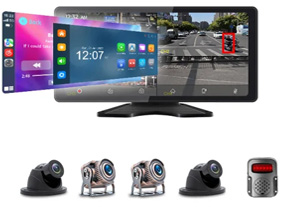
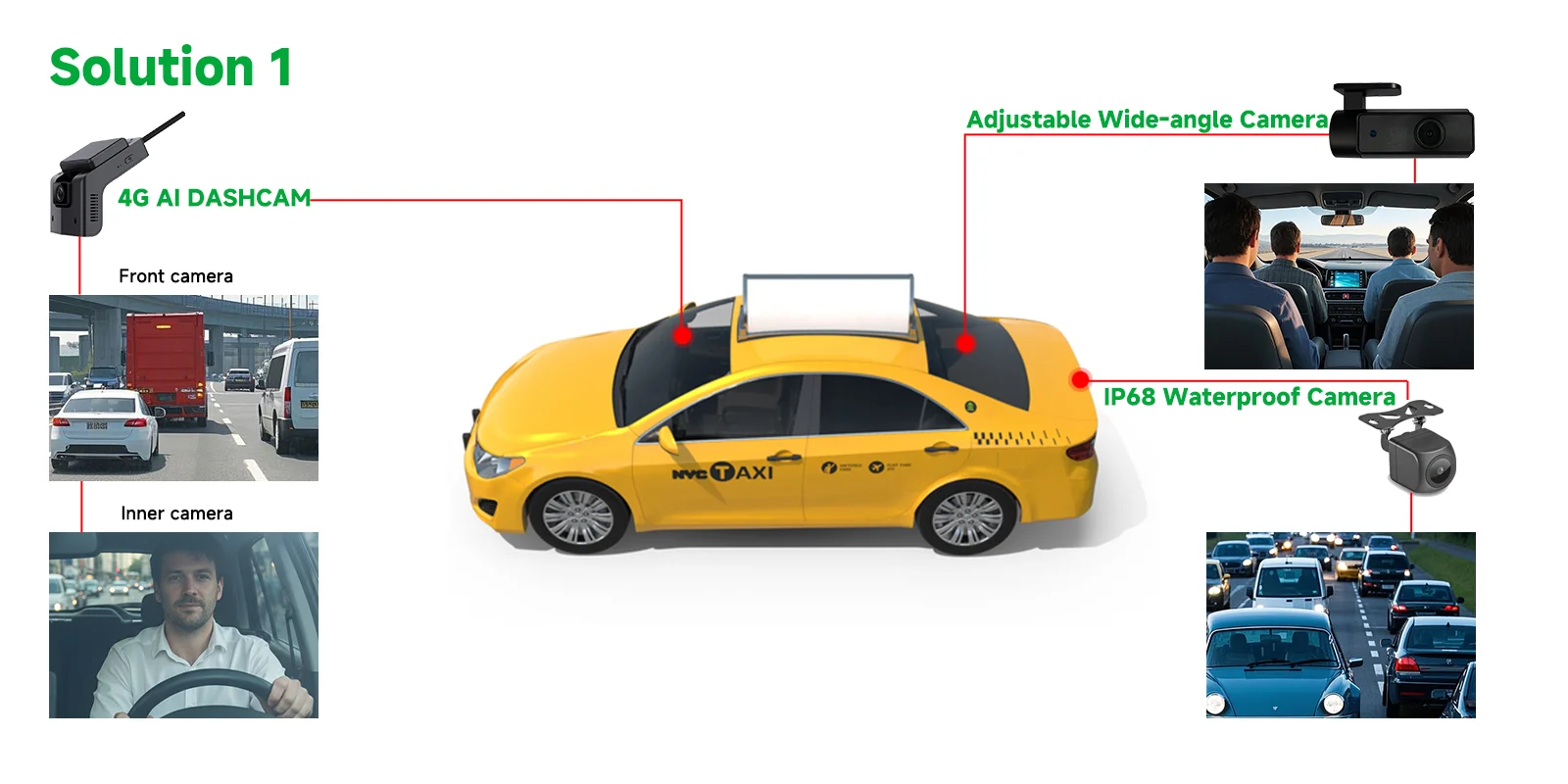
For the operational needs of taxis and ride‑hailing vehicles, a dual‑lens or triple‑camera setup is recommended – including front‑facing road view, rear view, and interior cameras. Synchronised three‑channel recording ensures that accident reconstruction, passenger safety management, and daily vehicle monitoring are all backed by verifiable data, leaving no blind spots.
3. Implementation Recommendations
The company may roll out the installation in phases: the first phase involves equipment selection and platform setup; the second phase covers installation and commissioning for all operating vehicles; the third phase establishes data management policies and integrates system usage into monthly driver assessments. Supporting training sessions should be provided to ensure the devices deliver maximum benefit.
4. Conclusion
The 4G AI smart dashcam is more than just a surveillance tool – it is a strategic infrastructure asset that helps the company reduce costs, mitigate risks, and enhance service quality. Early deployment and full implementation will provide strong support for the company’s digital transformation and brand image enhancement.
We recommend our C5 for this solution, and its key features include: