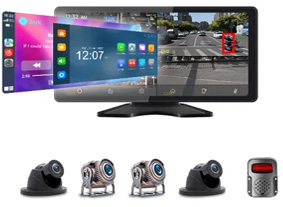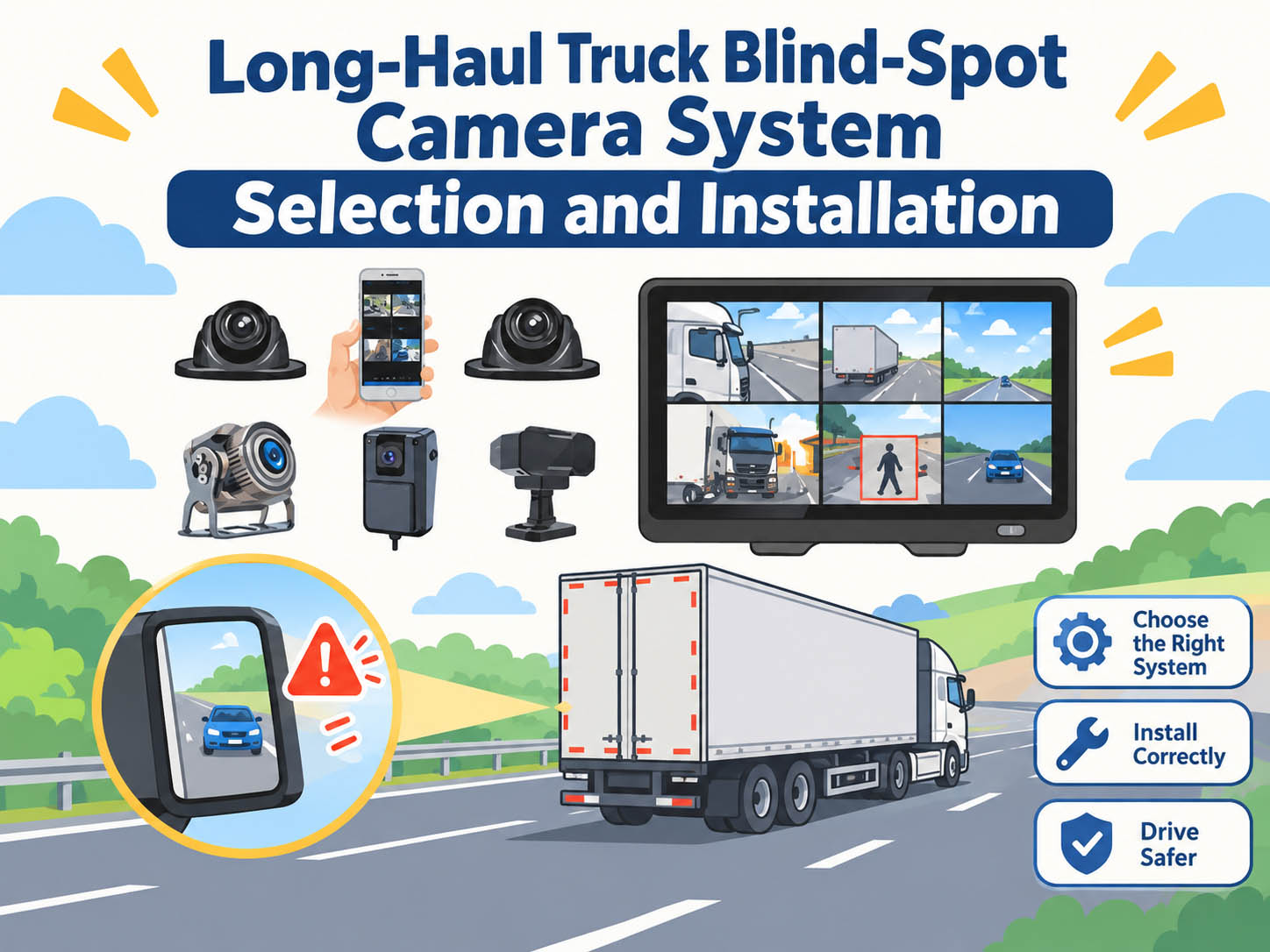
Long-haul trucks have large blind spots and long bodies, making right turns and lane changes especially risky. When selecting a system, the V27 is worth a close look: it combines BSD blind spot monitoring with ADAS advanced driver assistance. When a vehicle enters a blind spot, the system automatically warns the driver, helping reduce the risk of sideswipes and collisions from the start. Its 10.1-inch touchscreen is a standout feature—no physical buttons or remote control are needed. Drivers can quickly switch between front and rear camera views, pull up video, or adjust settings directly on the screen, making operation much more efficient while driving than with traditional button-based controls.
Installation determines whether the system can truly “see” and “warn” accurately. For placement, side BSD cameras should be mounted at the rear edge of the blind spot area—near the back of the vehicle—so they cover pedestrians and cyclists from behind. The mounting height should be at least 1.65 m, with the camera angled slightly outward and downward so the image stays focused on the vehicle’s blind spot zone. If following the stricter UN-R46 standard, the height can be set at 2.0–2.2 m, depending on the vehicle’s actual configuration. For calibration, place a reference object about 2 m in front of the camera at the same height as the installation point. Adjust the tilt so the top of the reference object aligns with the horizon line in the camera image, then fine-tune the alert zone boundaries using the calibration interface. Cable routing must be secured along the chassis with zip ties, avoiding cargo beds, mixer drums, and other moving components. Route cables from underneath the vehicle into the cab to connect to the main unit, preventing them from being pulled or worn during operation. The display should be mounted near the A-pillar and must not obstruct the driver’s view of the mirrors or the road ahead.
Choosing a touchscreen all-in-one system such as the V27—and getting the mounting height, angle, and cable routing right—is what turns blind spot monitoring into a reliable safety line for long-haul driving.